


You’ve seen the film.
You sat in the dark and watched a rough-handed man refuse to leave a boy alone — and something in you broke open a little. Maybe you cried. Most people did.
And then, somewhere on the drive home, a thought arrived quietly:
That place is real. I could actually go there.
You can.
The mountain valley where Danjong was exiled — where Eom Heung-do brought him warm rice and covered him with blankets and refused to look away — is a real town in Gangwon Province called Yeongwol (영월). It’s about two and a half hours from Seoul. And if you go with a stroller and a small child in tow, you will discover something that no travel guide has ever quite managed to capture:
This town has been waiting for you.
The “no-kids zone” signs you’ve seen in Seoul’s sleek café districts? They don’t exist here.
In Yeongwol, your stroller isn’t an inconvenience. It’s an invitation — a signal to every grandmother within eyeline that here is a child who deserves warmth, a snack, and a smile offered in the spirit of the man who never stopped trying to protect a boy the rest of the world had already abandoned.
This is a hyper-detailed logistics guide for eight of the film’s most sacred sites. Written by a parent, for parents. Every ramp, every floor surface, every diaper-change situation, noted.
Let’s go.
Getting to Yeongwol: Two Routes, One Good Decision
Option A — KTX-eum Train (Fastest, most relaxed)
Take the KTX-eum from Cheongnyangni Station. Use the Priority Elevator near Exit 3, Ground Floor — it runs directly to the platform with no steps or gaps.
On board, book Car 1 (next to the first-class section) or Car 4. Both have dedicated stroller bays at the entrance — wide enough for two large strollers side by side without blocking the aisle. The nursing room sits between Cars 2 and 3.
On arrival, Yeongwol Station is a single-story hanok building on completely flat ground. Outside, the Yeongwol Tourism Taxi stand is right in front. Ask the driver to load the stroller — they’ve done it a hundred times. For about ₩50,000, you get three hours of private, narrated transport between every site on this list. Worth every won.
Option B — Rental Car (Most freedom)
If you drive, make one mandatory stop: Deokpyeong Nature Rest Stop (덕평자연휴게소) on the Seoul-bound side. Korea’s best highway nursing facility. Private nursing sofas, dedicated diaper disposal units, baby-grade hand soap. Use it to fully reset before you arrive.
All eight sites in this guide have flat asphalt or level paving-stone parking. Your stroller wheels will not catch, drag, or spin.
The Eight-Site Pilgrimage: Every Detail You Actually Need
① Cheongnyeongpo — “A boy standing on an island, watching the mainland disappear”
This is where it begins.
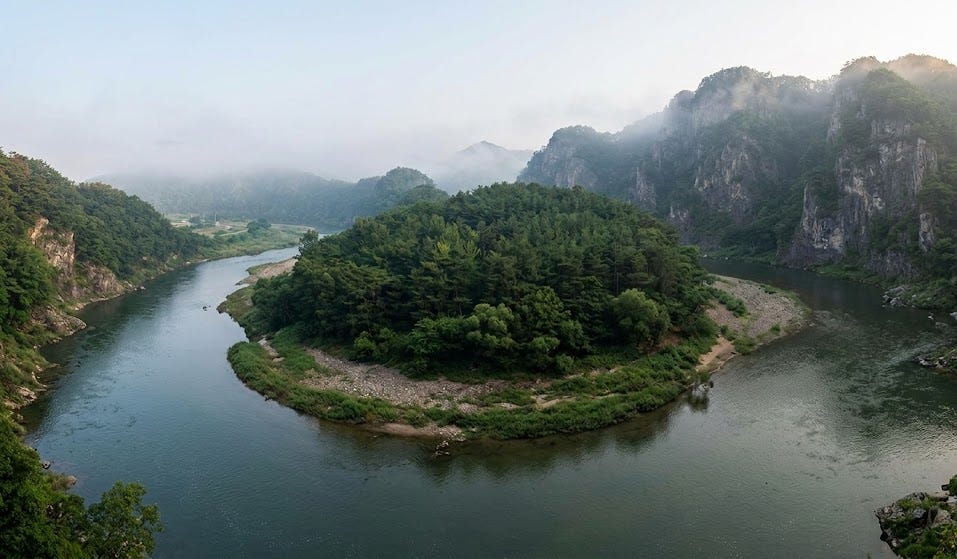
Cheongnyeongpo is the peninsula of land — nearly an island, wrapped on three sides by the Donggang River — where Danjong first arrived in exile. The scene in the film where he steps off the boat and realizes he cannot leave: this is that place.
Getting there: A short ferry crossing from the riverbank. There is a 15cm step onto the boat. Say “Help, please” to the crew member at the gate — they will immediately take both ends of the stroller frame without being asked twice.
Terrain on the island: Excellent. A 1.5-meter-wide wooden boardwalk runs through the entire pine forest. Two strollers can pass each other comfortably. The courtyard of the royal shelter (eoga) where Danjong lived is stroller-accessible. The interior rooms have high thresholds — view from outside.
One thing to know: The pine trees here are several hundred years old. They were saplings when he was alive. Standing among them with your child is a different kind of feeling.
② Jangneung Royal Tomb — “The place where the grief finally stopped”
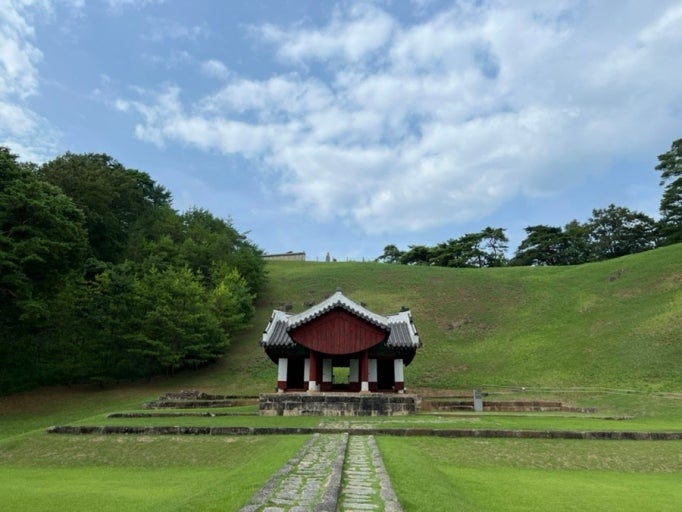
This is the film’s emotional endpoint — the site where Eom Heung-do, at mortal risk, secretly gave Danjong a proper burial. The ending that makes people reach for their sleeves in the dark.
Terrain: The gold standard for stroller travel in Yeongwol. Gently compacted earth paths with almost no incline. A lightweight travel stroller rolls here as easily as a full-frame one.
Logistics tip: On your left as you enter, the Danjong History Museum has a modern elevator to the second-floor exhibition. Take it. Tour the exhibition with your child, then use the bathroom near the exit before heading to the tomb itself — cleanest facilities in Yeongwol, by a significant margin.
What you won’t find in the brochure: The tomb itself is small and simple, set in a quiet grove. No crowds, even in high season. It has the quality of a place that has held sadness for so long it has become peaceful.
③ Gwanpungnu Pavilion — “The last room. The last morning.”
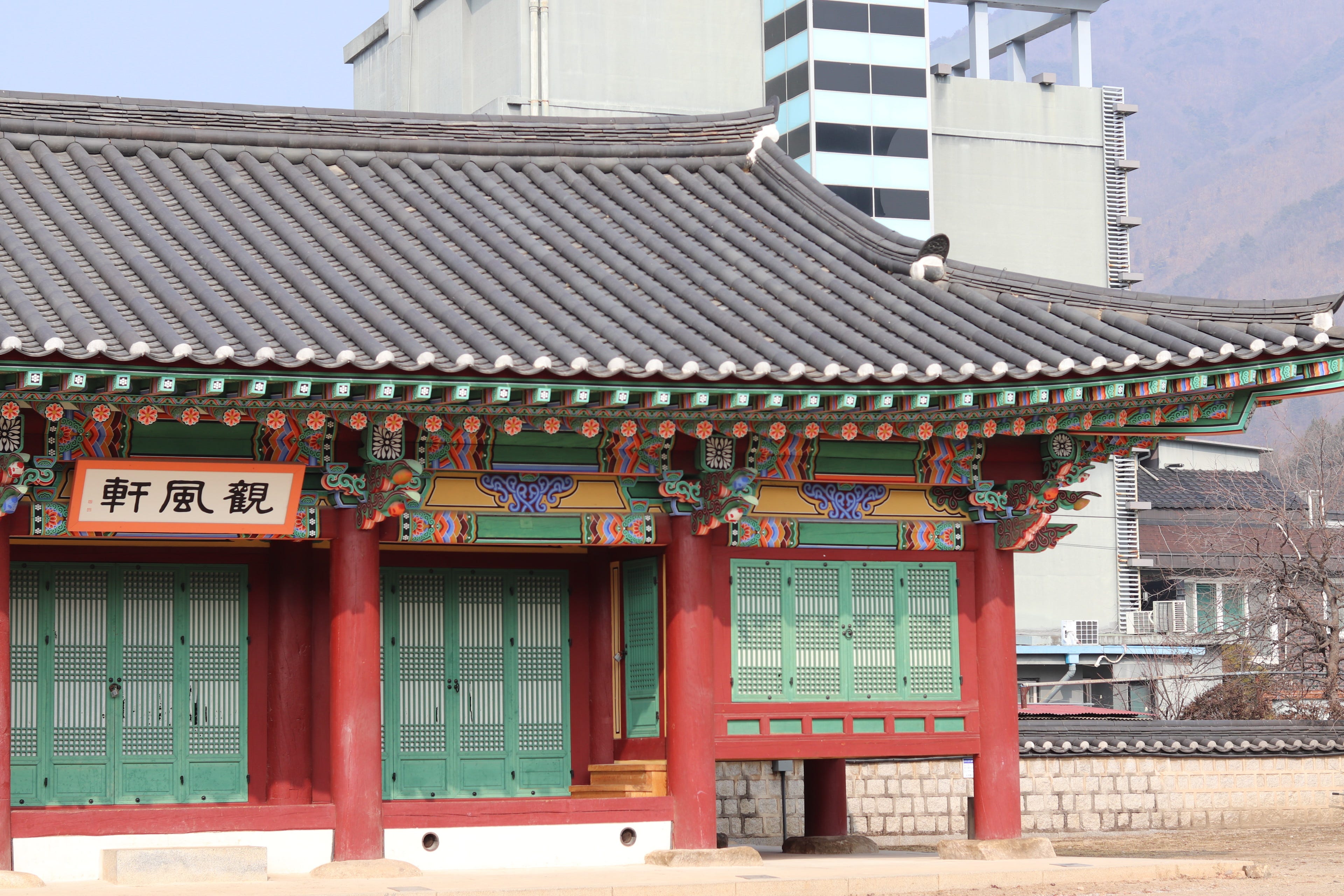
When flooding made Cheongnyeongpo uninhabitable, Danjong was moved here. This is where he received the poison. He was seventeen.
Terrain: Flat. Downtown Yeongwol, street-level, easy access. You can roll the stroller directly into the hanok courtyard.
The neighborhood around it: Unlike the stern historical sites, the streets near Gwanpungnu are lined with small hanok cafés. Every single one of them is an All-Kids Zone. You will be welcomed. You will probably be offered something for the baby unprompted.
Sit. Stay a while. Order the sikhye (sweet rice drink). Let it land.
④ Seondol — “The standing stone that outlasted everything”
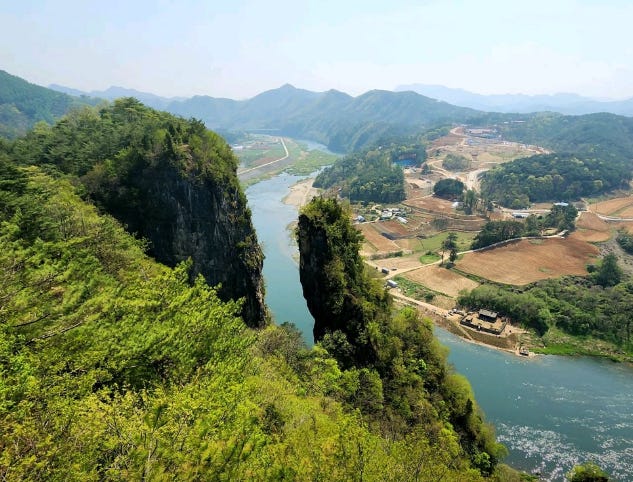
Seondol — literally “standing stone” — is a 70-meter limestone monolith rising sheer from the Donggang River. It has watched over Yeongwol for longer than the dynasty that exiled Danjong. Standing at the base with your child and looking up is one of those moments that quietly resets your sense of scale.
Access: Short walk from the parking area on a flat riverside path. Easy and stroller-friendly throughout.
Terrain: Well-maintained dirt and gravel path along the river’s edge. Wide enough for a full-frame stroller with no obstacles.
Safety note: The path runs close to the river in places. Keep the stroller braked when stopping to look, and hold your child’s hand near the water’s edge.
The view: The stone reflected in the Donggang on a still morning is one of the most quietly extraordinary things in Yeongwol. Come early.
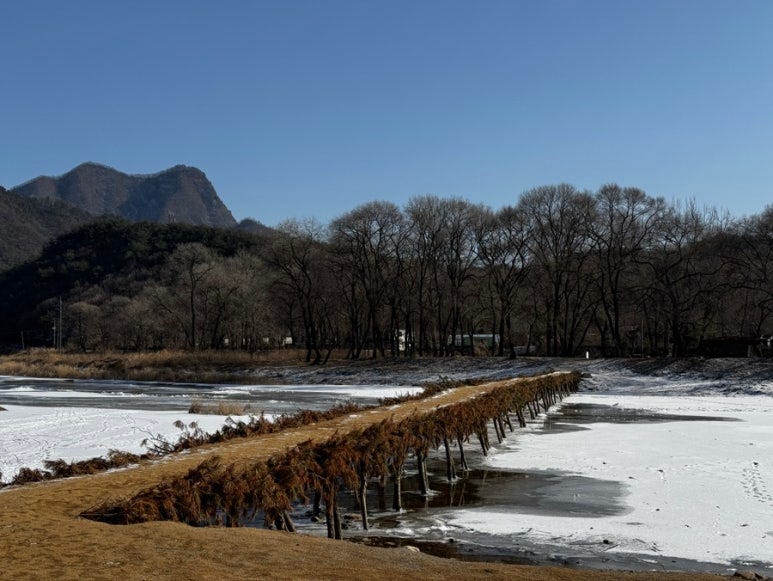
⑤ Panun-ri Stepping-Stone Bridge — “The bridge where the news arrived”
In the film, messengers cross a traditional woven-branch bridge to carry word between the outside world and Danjong’s valley. This is that bridge.
Stroller access: The bridge itself — woven pine branches and packed earth — cannot be crossed with a stroller. But the flat meadow and dirt path leading to it are smooth for the final 10 meters before the bridge entrance.
Park the stroller. Walk to the water’s edge. Take the photograph.
There is something about standing at this bridge with your child — the same river, the same light, 500 years later — that the film cannot fully prepare you for.
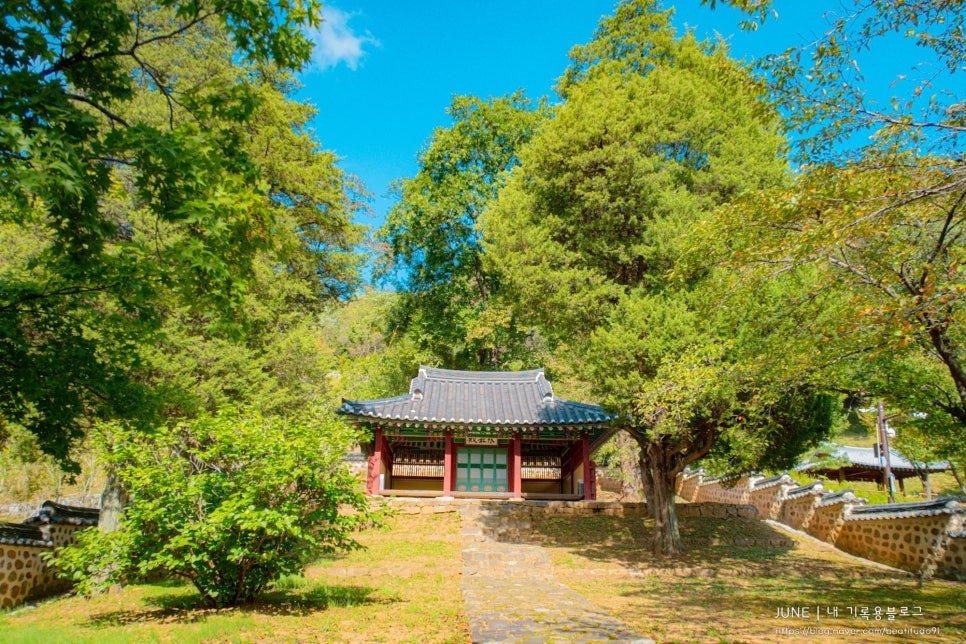
⑥ Yeongmojeon Shrine — “The boy who became a mountain spirit”
After his death, the people of Yeongwol quietly refused to forget Danjong. They built a shrine. They made him a god of the mountain. It’s one of the stranger and more moving footnotes of the story — a community’s small, unofficial act of defiance against the official verdict of history.
Terrain: Gentle ramp from the entrance all the way to the shrine. No steps.
When to visit: This is the quietest site on the list. Almost nobody here on weekday mornings. If your child is asleep in the stroller, this is your walk — cool shade, birdsong, the sound of nothing moving fast.
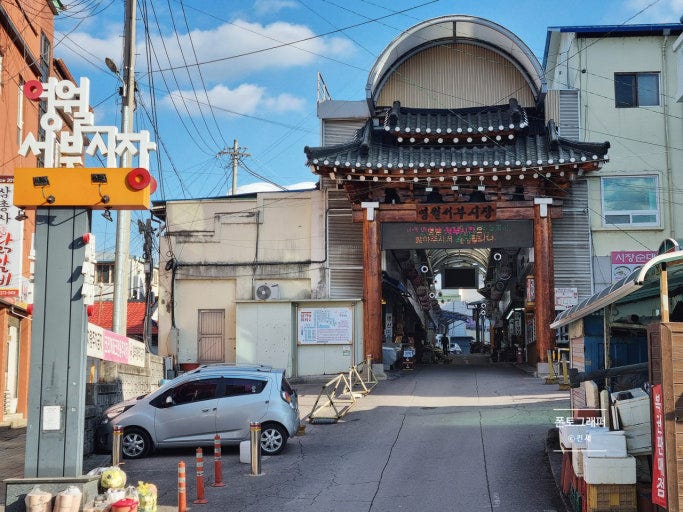
⑦ Yeongwol West Market — “The market where Eom bought the warm rice”
The market isn’t a film location in the literal sense. But it is the beating heart of everything the film is about.
This is where Eom Heung-do would have gone — quietly, carefully, hoping no one important was watching — to buy the food he brought to the boy. Hot food. Real food. I-actually-care-whether-you-eat-it food.
Terrain: The central market corridor is wide enough for two strollers side by side with room to spare.
Where to eat: Find Mitan-jip (미탄집) — they make memil jeonbyeong, thin buckwheat crepes filled with vegetables and tofu. The restaurant has floor seating in the Korean style. Park the stroller at the entrance, sit your child on the warm ondol floor, and order one of everything.
The owner will not make a fuss over you. She’ll just quietly make sure your kid has enough.
That is the fuss. That’s jeong.
Before you leave the market: Grab a box of dakgangjeong (닭강정) — Yeongwol’s sweet-and-crispy fried chicken bites — from one of the stalls near the exit. They travel well. Your kids will demolish them on the train home.
And here’s the detail that makes the whole day click into place: the last KTX-eum back to Seoul (Cheongnyangni) departs Yeongwol Station at 20:35, arriving at 22:40. Dinner at the market, dakgangjeong in the bag, kids asleep in the stroller by the time you pull into the city. That’s not a schedule. That’s a full day done right.
(Heads up: train times shift by season. Always double-check on the Korail Talk (코레일톡) app before you go.)
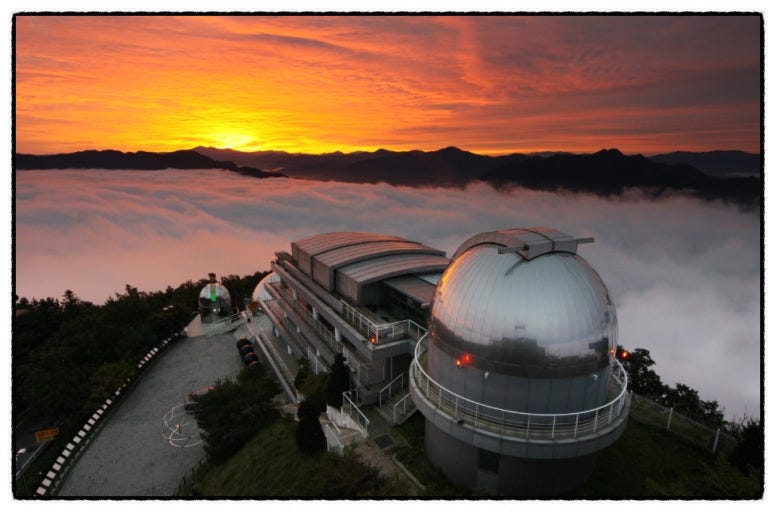
⑧ Byeolmaro Observatory — “He became a star. Look up.”
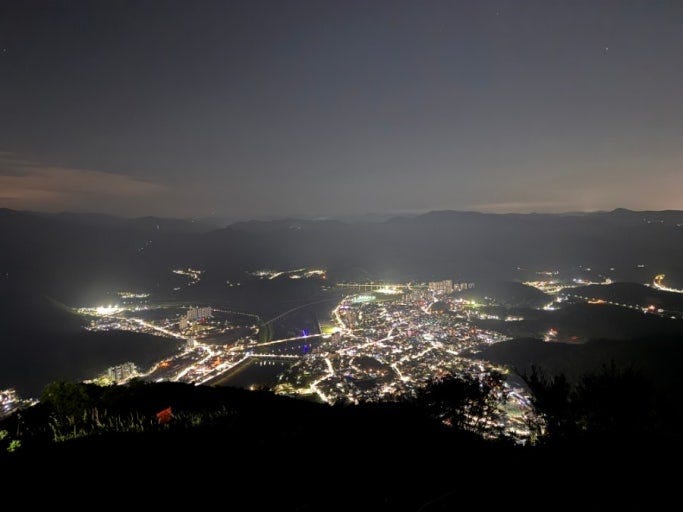
The film ends with the understanding that Danjong is not simply gone — he is remembered, tended, made permanent by the people who refused to forget him. The observatory is this idea made physical: the highest point in Yeongwol, built for the sole purpose of looking at what endures.
Access: The mountain summit is fully elevator-accessible on every floor. You can take the stroller all the way to the rooftop observation deck.
Night visit: The night sky in Yeongwol is legitimately extraordinary — this region has some of the lowest light pollution in the country. If your child can stay up, come after dark.
One critical note: Temperature at the summit drops sharply after sunset, even in spring. Bring the stroller windshield cover. This is not a suggestion.
Choose Your Route
The Cinematic Run (Full emotional arc, one day) Yeongwol Station → Cheongnyeongpo → Jangneung → Gwanpungnu → West Market (dinner + dakgangjeong to go) → Byeolmaro (night sky) → Last KTX-eum 20:35 → Seoul 22:40
The Gentle Stroll (Low energy, high meaning) Yeongwol Station → Jangneung → Sports Park (wide open grass, let the kid run) → Yeongmojeon → Nursing room at the station
The Photo Day (For the shots you’ll actually frame) Yeongwol Station → Panun-ri Bridge → Seondol → Korean Peninsula Landform Overlook → West Market (dakgangjeong to go)
⬇ Download the Free Hyper-Detailed 8-Spot Map⬇
One Last Thing From Your Local Dad
In Seoul, your stroller can feel like a liability. You learn to calculate doorways and check for ramps and brace for the narrow café aisle.
In Yeongwol, the calculus is different.
Here, your stroller is a signal. It says: there is a small person in my care, and I am taking them seriously. And the people of this town — the grandmother at the market stall, the taxi driver who loads your frame without being asked, the museum attendant who holds the elevator door — respond to that signal in a way that feels less like hospitality and more like recognition.
They see you. They see your child.
They have been practicing this, in their way, for five hundred years.
Don’t hesitate. Book the train. Load the stroller. Come.
I’ve got your back.
Found this useful? Share it with a parent who’s been wondering whether Korea is worth the trip with little ones. It always is. —Local Dad